Symptoms
Growth deficiency- this is defined as a below normal height and weight for the patients population. Growth deficiency can be measured at any point in the lifespan with a deficiency noted when the height or weight falls below 10 percent of the population of people the same age when several factors are taken into account like the parents height, whether the infant was premature and also some external factors like nutrition.
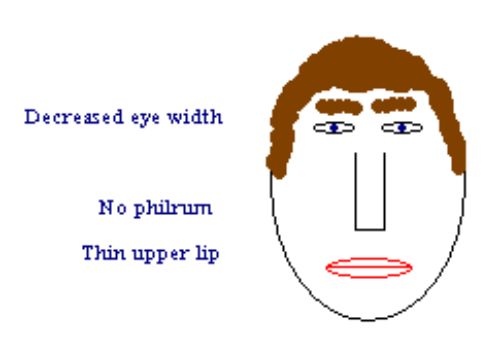 Facial features- Abnormalities with facial features in patients with fetal alcohol syndrome indicate brain damage although brain damage may still be present even in the absence of any abnormal facial features. There are three characteristic fetal alcohol syndrome facial features that include the absence of the philtrum (the groove found between the nose and the upper lip), Thin upper lip and a decreased eye width. The severity of these features is measured on a 5 point scale with 5 being the most severe and 1 being the least, the features are measured using a lip-philtrum guide and also by using measurements taken using callipers.
Central nervous system- depending on the amount, the time period and how often alcohol is consumed depends on how severe impairments to the CNS are. CNS damage is evaluated in three areas which include structural, functional and neurological.
Structural damage- some of these are observable damages such as microcephaly (small head), other impairments must be viewed using medical imaging techniques. The following timing of alcohol consumption are thought to cause distinctive abnormalities:
First trimester: incorrect migration and organization of the brain cells therefore forming incorrect or non functioning brain regions
Third trimester: hippocampal damage causing learning, emotional, visual, auditory and memory problems for the infant.
As well as these damages other areas are seen to be affected such as the corpus callosum, cerebellum, brain stem and olfactory bulbs.
Functional damage- confirmation in this area is controversial across the diagnostic systems used but some features are common across all. Behaviour and cognitive dysfunction measured through learning disabilities seen in the patients academic achievements and everyday skills such as communication, memory, motor movements, sensory abnormalities, hyperactivity and attention.
Neurological- caused by the alcohol exposure causing damage to the CNS, when diagnosing this area other postnatal injurys must be taken into account such as concussion. Neurological disorders caused by fetal alcohol syndrome are determined as anything from epilepsy to impaired motor skill, hearing loss and clumsiness.
Did You Know?
It is not safe to drink any amount of alcohol whilst pregnant.